Nature Preschool vs. Daycare: 7 Differences That Actually Matter
If you're searching for nature-based preschool options, forest preschool, outdoor preschool, or early childhood programs in your area, there's a good chance you're also comparing those with traditional daycare.
When comparing outdoor preschool with daycare, the language can sound surprisingly similar.
Play-based. Child-centered. Hands-on. Outdoor time. Social-emotional learning.
Those are all wonderful things—and you'll find excellent daycare centers doing them really well.
But a nature-based preschool and a traditional daycare are often designed to meet different needs, and that's where the real differences begin.
One isn't automatically better than the other.
A family needing full-day childcare five days a week is solving a very different problem than a family looking for a two-morning-a-week nature preschool experience.
So instead of asking, "Which one is better?" we think the more useful question is:
"What does my child—and our family—actually need right now?"
Here are seven differences worth considering.
Where Learning Happens: Outdoor vs. Indoor-Based Learning
This is probably the most obvious difference.
Traditional daycare and preschool programs generally have an indoor classroom as their home base, with outdoor play incorporated into the day.
A nature-based preschool flips that relationship.
The outdoor environment becomes a significant part of the classroom itself.
At ROOTS, that means children aren't simply going outside to take a break from learning.
Outside is where much of the learning happens.
A garden changes with the seasons.
A puddle that wasn't there yesterday becomes an investigation.
An insect under a log creates ten new questions.
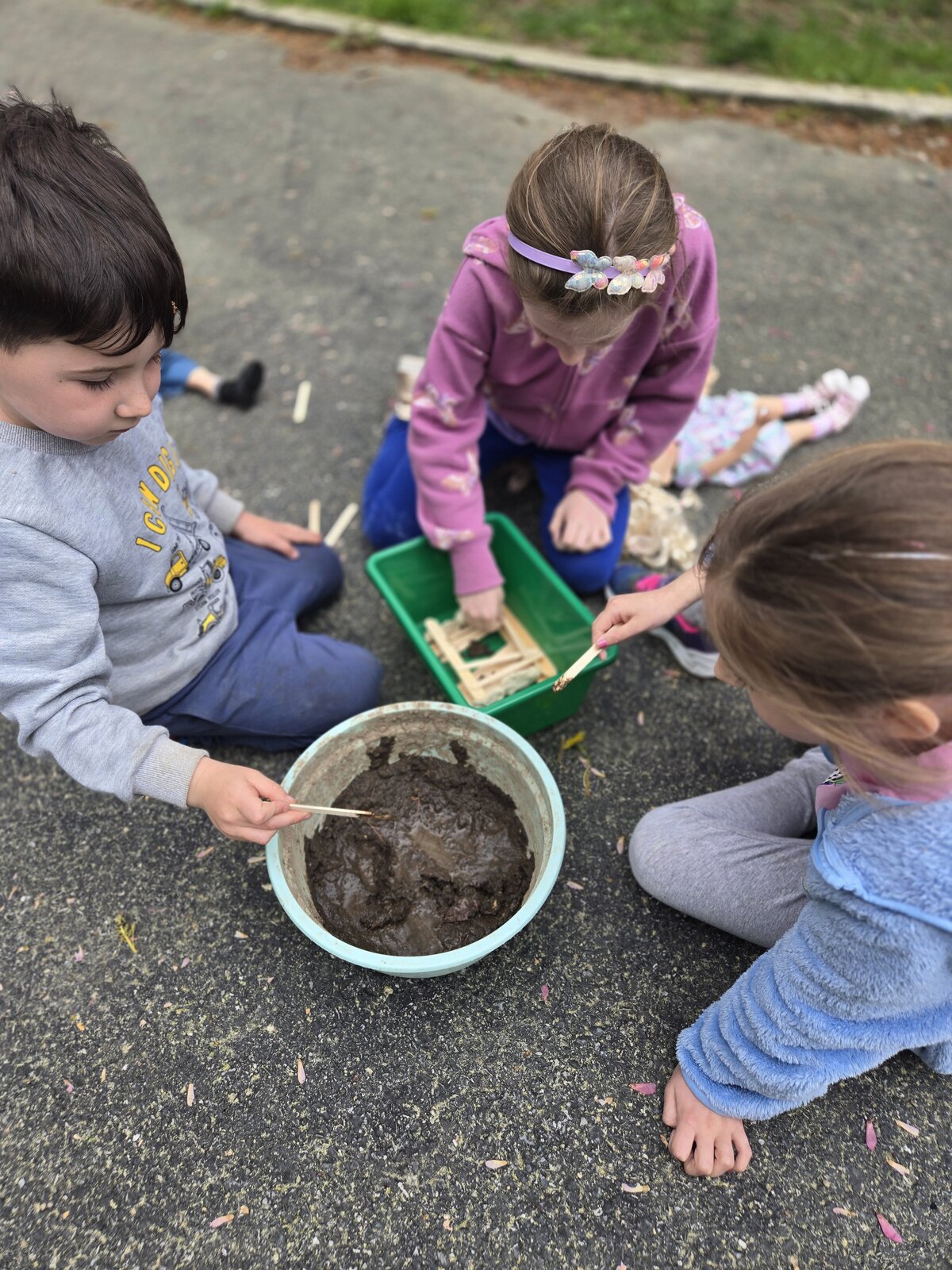
Mud becomes a building material.
A stick becomes a tool, a story prop, a measuring device, or part of something children are trying to create together.
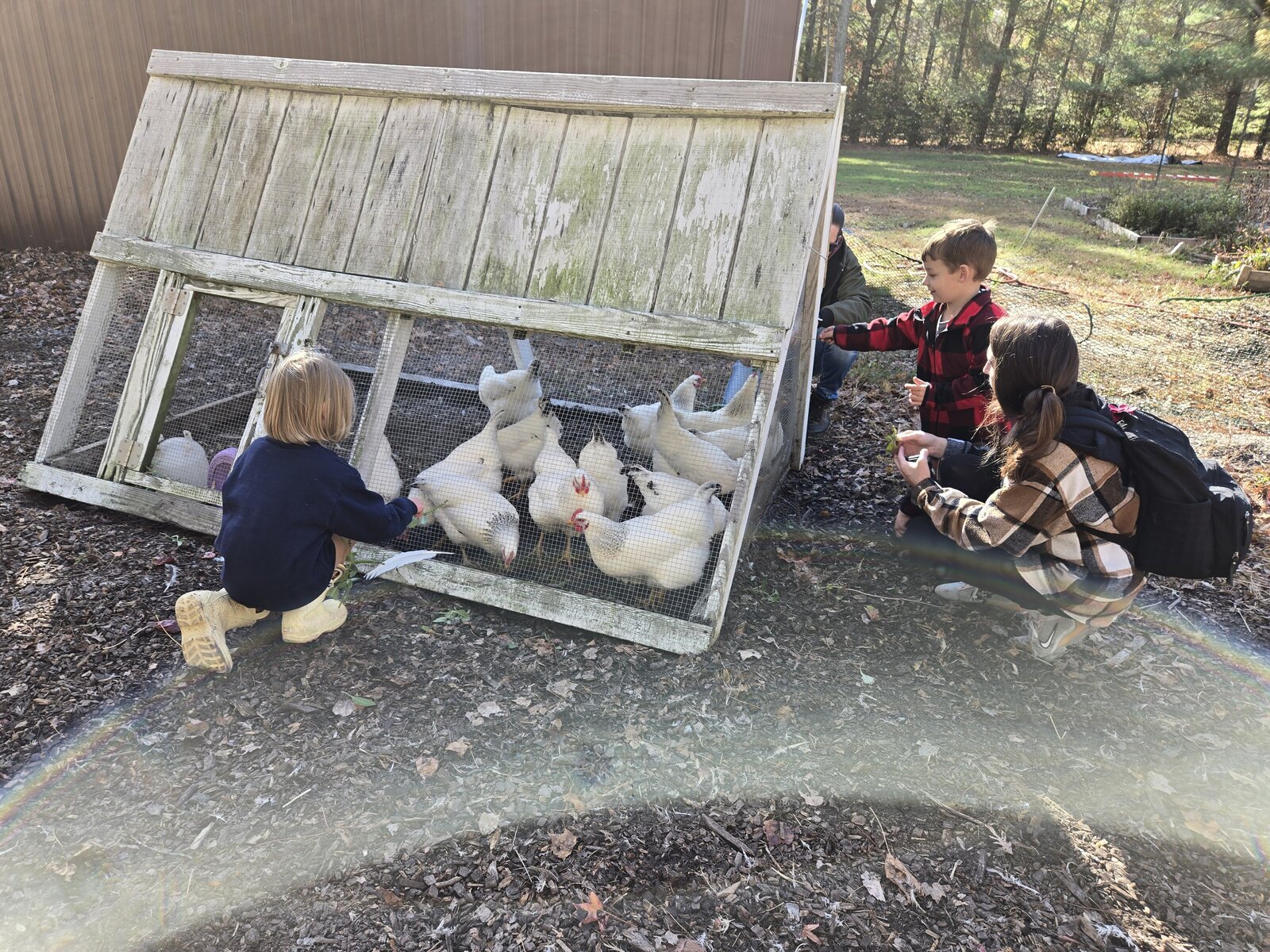
The environment is constantly changing, which means the possibilities for curiosity change with it.
And that's part of the point.
The Adult's Role Looks Different: Facilitator vs. Traditional Teacher
One of the most important things to watch when you tour any early childhood program isn't the toys or the classroom.
Watch the adults.
How do they speak to children?
What happens when a child is frustrated?
Do adults immediately solve the problem—or give the child enough support and time to try?
Do they ask questions?
Do they notice what children are interested in?
Do children seem comfortable approaching them?
In a strong nature-based program, educators often think of themselves as facilitators and observers as much as teachers.
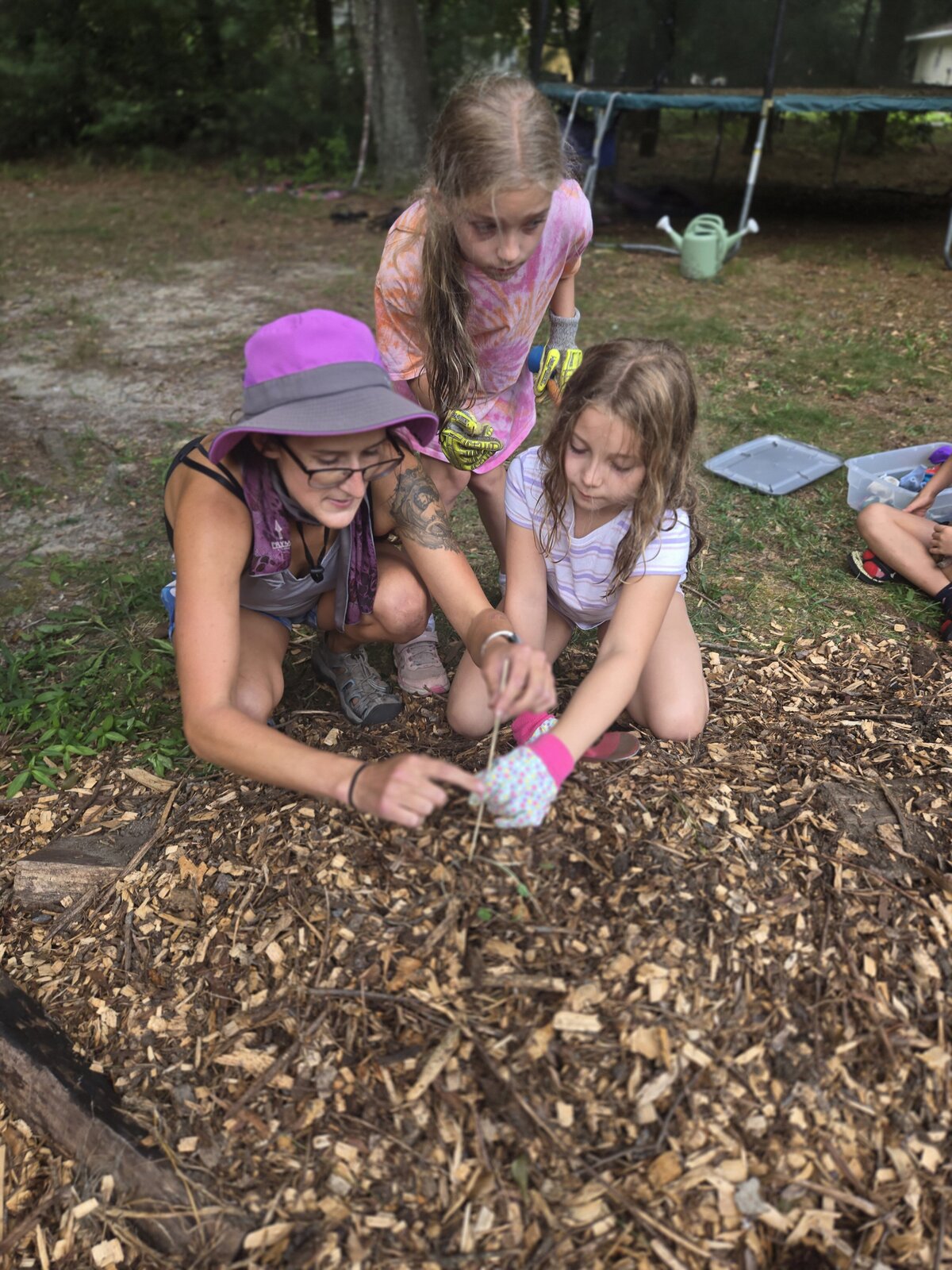
If a child is trying to move a log, tie something together, climb onto something, or figure out how to get water from one place to another, the adult doesn't necessarily need to provide the answer.
Sometimes our job is to ask:
"What have you tried?"
"What do you notice?"
"What else could work?"
And sometimes our job is simply to stay close enough for safety and give them another minute.
That doesn't mean adults are uninvolved.
It means we're intentional about knowing the difference between helping a child and taking over for them.
Risk Isn't the Same Thing as Danger
This is one of the biggest philosophical differences families notice in nature-based education.
We believe children need opportunities to experience appropriate risk.
Risk and danger aren't the same thing.
Danger is something a child may not be able to see or reasonably evaluate.
Risk is something they can begin learning to assess with the support of a knowledgeable adult.
That might look like balancing on a log.
Climbing.
Using an age-appropriate real tool with direct supervision.
Moving something heavy.
Walking across uneven ground.
Testing whether something they've built will actually hold.
We don't remove every challenge from children's environments.
We teach them how to approach challenges thoughtfully.
You'll hear us ask things like:
"Do you feel steady?"
"What's your plan for getting down?"
"What do you need to do before we use this tool?"
The goal isn't to create fearless children.
It's to help children develop judgment, body awareness, confidence, and trust in their own growing abilities.
The Rhythm of the Day May Be Different
Young children need rhythm and predictability.
But rhythm doesn't have to mean moving to a new activity every fifteen minutes.
One of the things we value deeply at ROOTS is giving children enough time to actually become absorbed in what they're doing.
Sometimes the most meaningful learning happens after the first ten minutes.
A group starts digging.
Then they're making a river.
Then someone realizes the water keeps escaping.
Now they're trying to stop it.
Someone gathers rocks.
Someone else brings mud.
They're negotiating whose idea to try.
They're measuring without calling it math, engineering without calling it engineering, communicating, failing, changing the plan, and trying again.
And if we're paying attention, we don't necessarily interrupt all of that because the clock says it's time for a new "activity."
A strong nature preschool still has a rhythm—arrival, gathering together, exploration, snack, stories, songs, closing, or whatever that particular program has designed.
But within that rhythm, there can be long stretches of uninterrupted play, investigation, and discovery.
Children need time to go deep.
The Materials Aren't Always Toys
Some of the best materials in a nature preschool were never designed for children.
Sticks. Stones. Water. Mud. Leaves. Pinecones. Logs. Flowers. Seeds. Buckets. Rope. Garden tools.
And yes, nature-based programs can absolutely have books, art supplies, blocks, sensory materials, and traditional toys too.
But we place a lot of value on open-ended materials because the child has to decide what they're for.
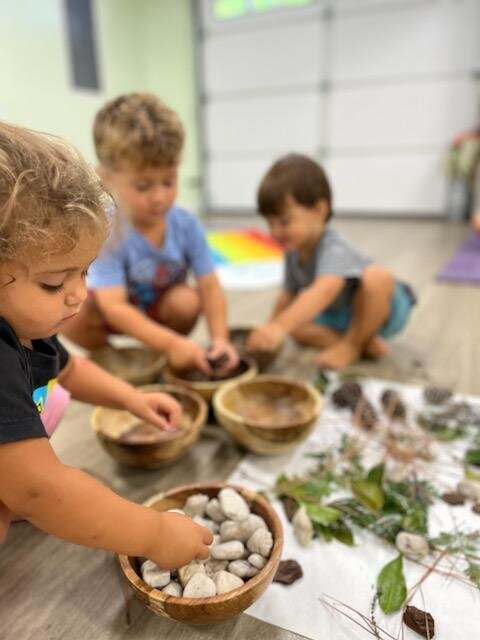
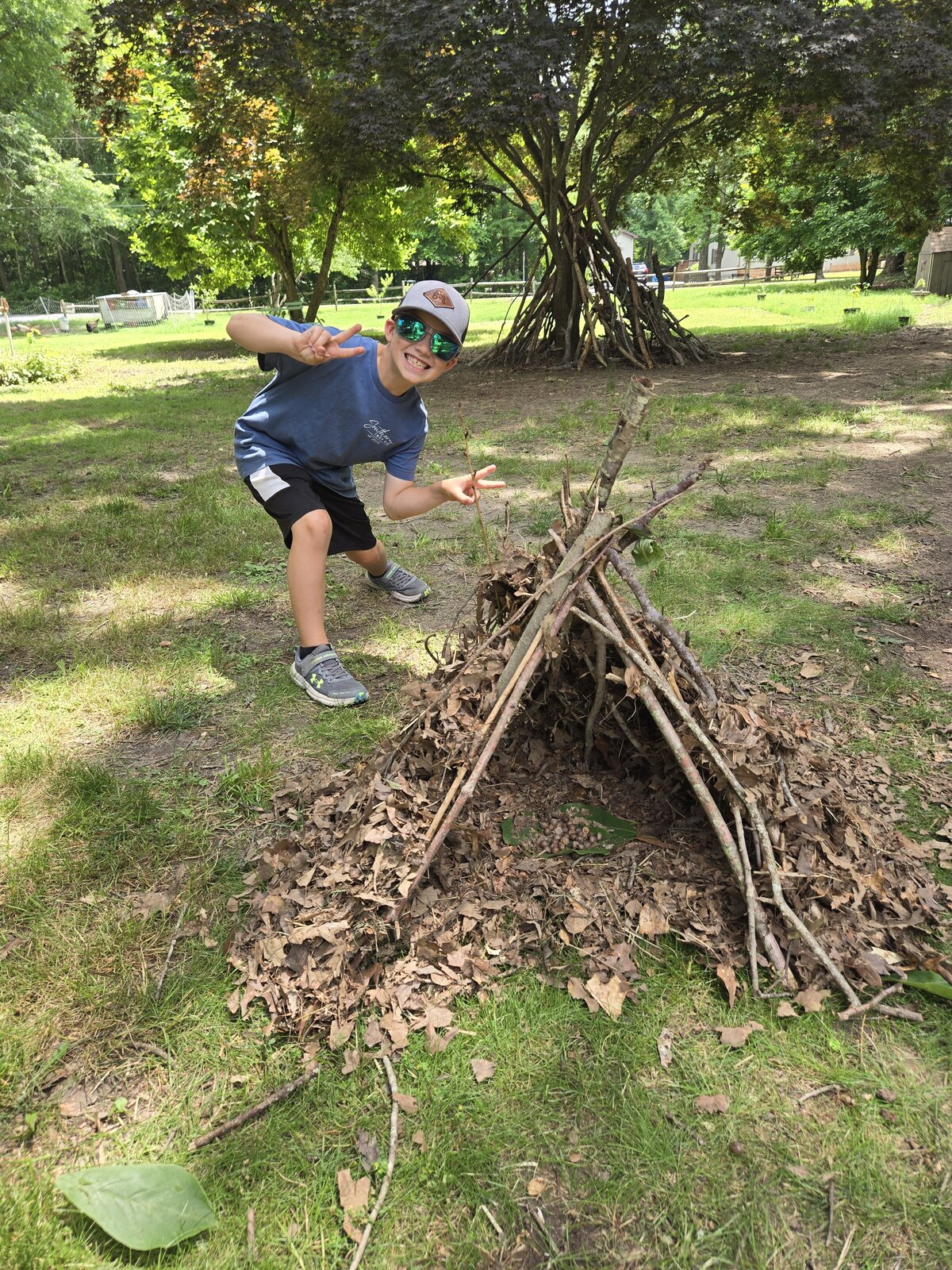
A plastic toy may already tell you what it is.A stick doesn't.
Today it's part of a shelter.
Tomorrow it's a fishing pole.
Then it's a wand, a bridge, a boundary line, a flagpole, a stirring spoon for mud soup, or something an adult would never have thought of.
That process requires imagination, communication, negotiation, and problem-solving.
We also believe children benefit from meaningful access to real work and real tools when developmentally appropriate and properly supervised.
There's something powerful that happens when a young child realizes:
They trust me to do something real.
That's how capability grows.
Weather Becomes Part of the Experience
Nature-based families become very familiar with one particular phrase:
There's no bad weather, only the wrong gear.
Okay… Delaware occasionally gives us weather that challenges that philosophy.
Safety always comes first.
Thunderstorms, dangerous winds, extreme temperatures, poor air quality, and other unsafe conditions can absolutely change the plan.
But rain?
Mud?
Cold?
A gray day?
Those don't automatically mean childhood has to move indoors.
Part of nature-based education is helping children develop a relationship with the natural world as it actually is, not only when it's 72 degrees and sunny.
They begin noticing seasons.
They discover what happens to the same space after rain.
They learn why boots matter.
They notice which animals disappear when it's cold and which ones don't.
They feel the difference between frozen ground and spring mud.
And over time, weather becomes less of an obstacle and more of something they know how to navigate.
Good gear makes an enormous difference, and we help our families understand what children need to stay comfortable outside.
They May Be Solving Two Completely Different Problems
This might be the most important difference.
Daycare is care. Preschool is education. And sometimes a program is intentionally both.
Many childcare centers provide wonderful early education while also giving families something absolutely essential: reliable care that allows parents and caregivers to work.
A nature preschool may be designed very differently.
ROOTS Nature Preschool, for example, is a two-hour program offered twice a week for children ages 2–5.
We're not trying to provide 50 hours of childcare.
We're creating an intentional early-childhood experience centered around nature, relationships, play, exploration, and growing independence.
For some families, that's exactly what they're looking for.
For others, it's something they add alongside another childcare arrangement.
And for a family that needs full-day coverage five days a week?
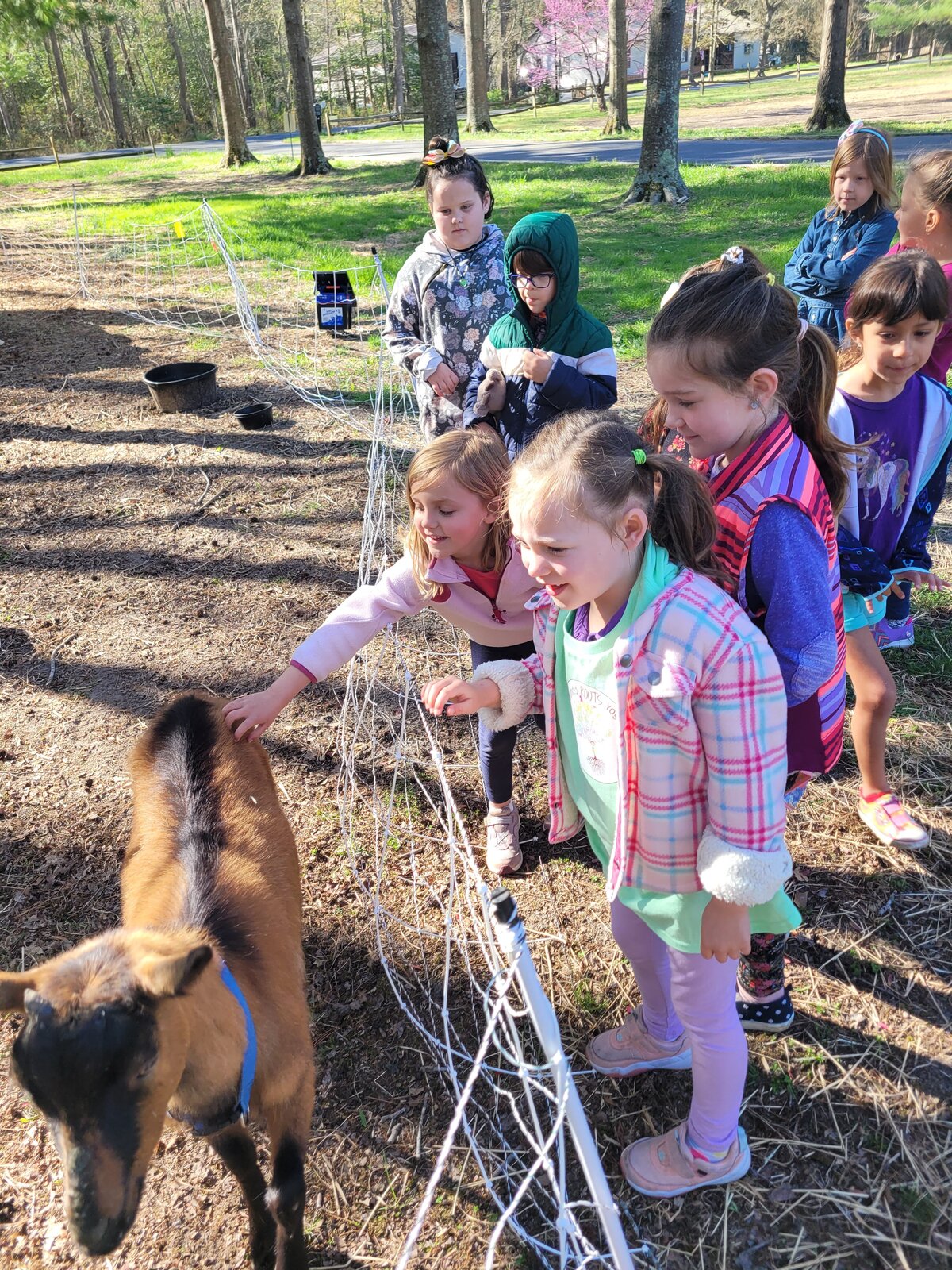
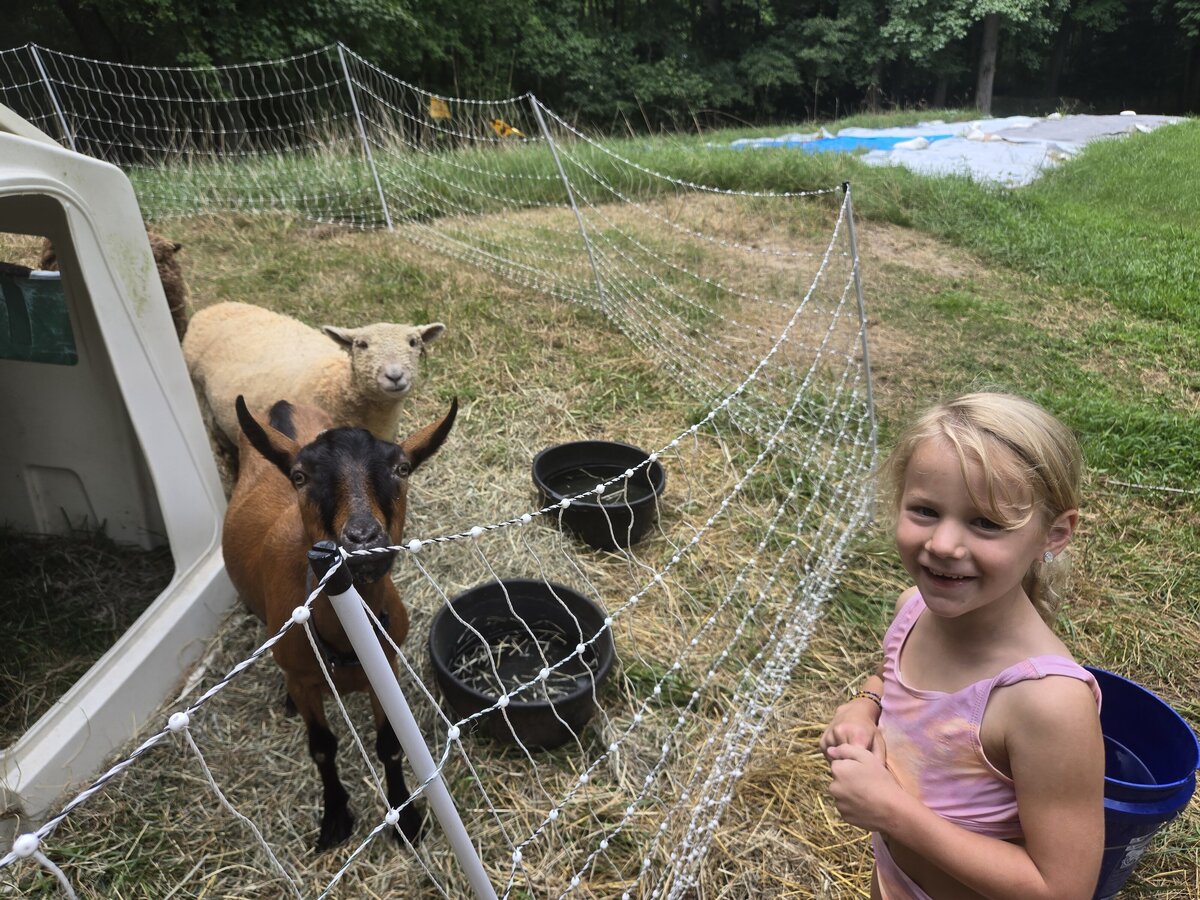
A two-hour nature preschool isn't going to magically solve that logistical need, no matter how much their child loves the goats.
That's important to say out loud.
The right educational philosophy still has to work within the reality of your family.
So What Are Children Actually Learning? Early Childhood Development in Nature Preschools
This is one of our favorite questions because so much of early childhood learning doesn't look like "school" at all.
When children are digging together, they're learning.
When they're waiting for a turn, they're learning.
When they're counting eggs, noticing patterns in leaves, listening for beginning sounds, retelling a story, measuring dirt, pouring water, identifying colors, singing, building, sorting, asking questions, or figuring out how to communicate with another three-year-old who also desperately wants the same shovel…
They're learning.
At ROOTS, our preschool approach intentionally supports early literacy, early numeracy, language development, fine and gross motor skills, executive functioning, social-emotional development, creativity, independence, and practical life skills.
But we don't believe a three-year-old needs elementary school pushed down into preschool.
Early childhood has its own important work.
- Play is part of that work.
- Relationships are part of that work.
- Moving their bodies is part of that work.
- Learning how to be with other people is part of that work.
- Getting muddy can be part of that work, too.
What's Actually the Same?
It's easy to write an article like this as though daycare and nature preschool exist on opposite sides of some educational battle.
They don't.
There are incredible childcare centers.
There are incredible nature preschools.
There are also mediocre versions of both.
The label doesn't tell you everything.
A high-quality early childhood program—whatever philosophy it follows—should care deeply about children's safety, relationships, development, communication, belonging, and wellbeing.
So when you visit, look beyond whether the website says "play-based."
Watch what actually happens.
Those answers will tell you much more than a label ever could.
Which One Is Right for Your Child?
A nature preschool may be especially appealing if your child comes alive outside.
- Maybe they're always collecting rocks.
- Maybe they're happiest covered in dirt.
- Maybe they need to move their whole body before they're ready to slow down and listen.
- Maybe they're cautious and you want them to have gentle opportunities to build confidence.
- Maybe they're incredibly social.
- Maybe they're slow to warm up.
- Maybe they're the kid who wants to know why about absolutely everything.
Or maybe there's nothing you're trying to "fix" at all.
You simply want their early childhood to include more nature, more movement, more imagination, more meaningful experiences, and less rushing toward the next stage.
That's reason enough.
And if your child has sensory needs, mobility needs, developmental differences, or simply doesn't love mud and cold, don't automatically assume nature-based education isn't for them.
Talk to the program.
Ask what accommodations are possible.
Ask what the environment actually looks like.
Ask how they support individual children.
Because once again, the child matters more than the label.
Nature Preschool at ROOTS
ROOTS offers nature-based preschool for ages 2–5 at our Georgetown and Milton campuses.
Our preschoolers spend their time exploring, creating, building relationships, developing independence, moving their bodies, getting messy, asking questions, and discovering the natural world alongside educators who know them well.
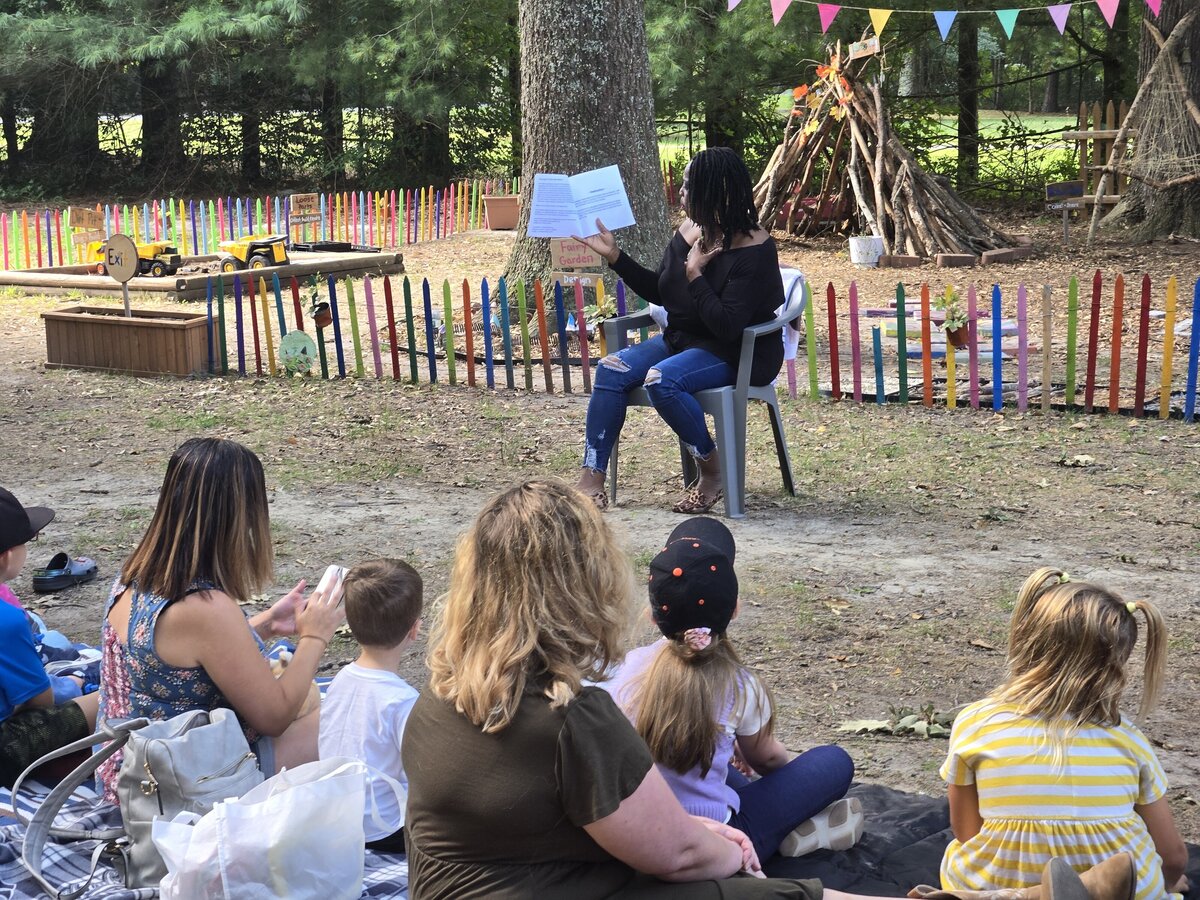
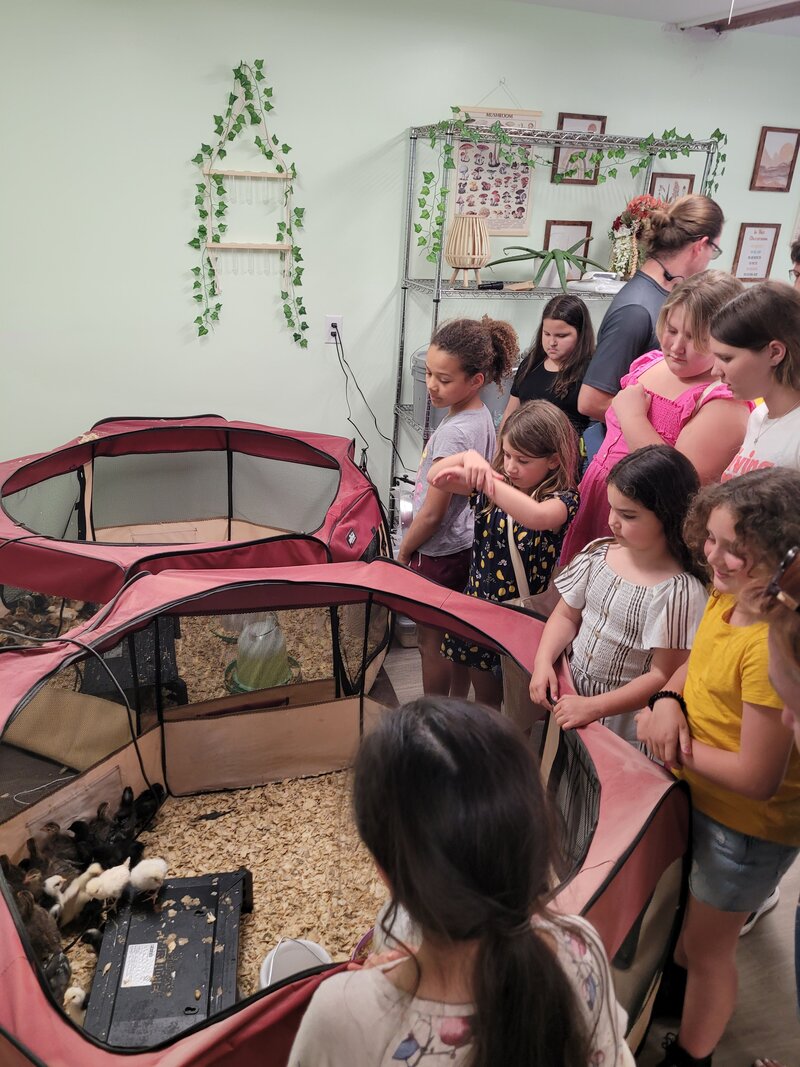
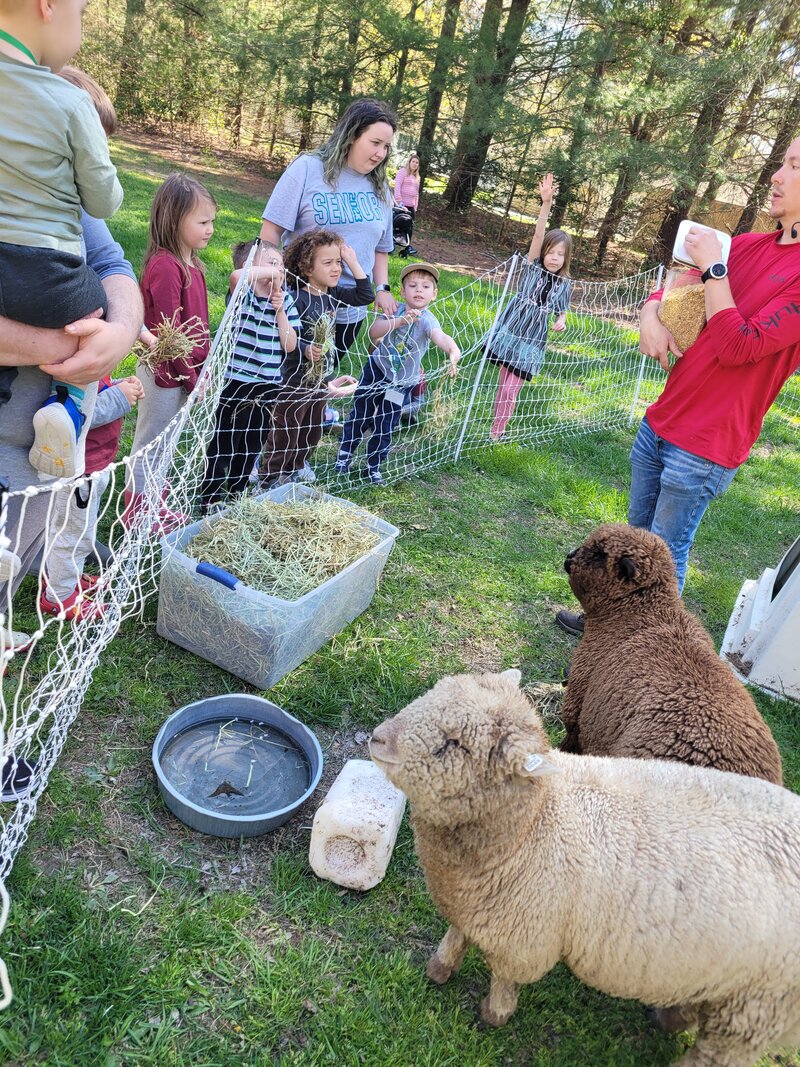
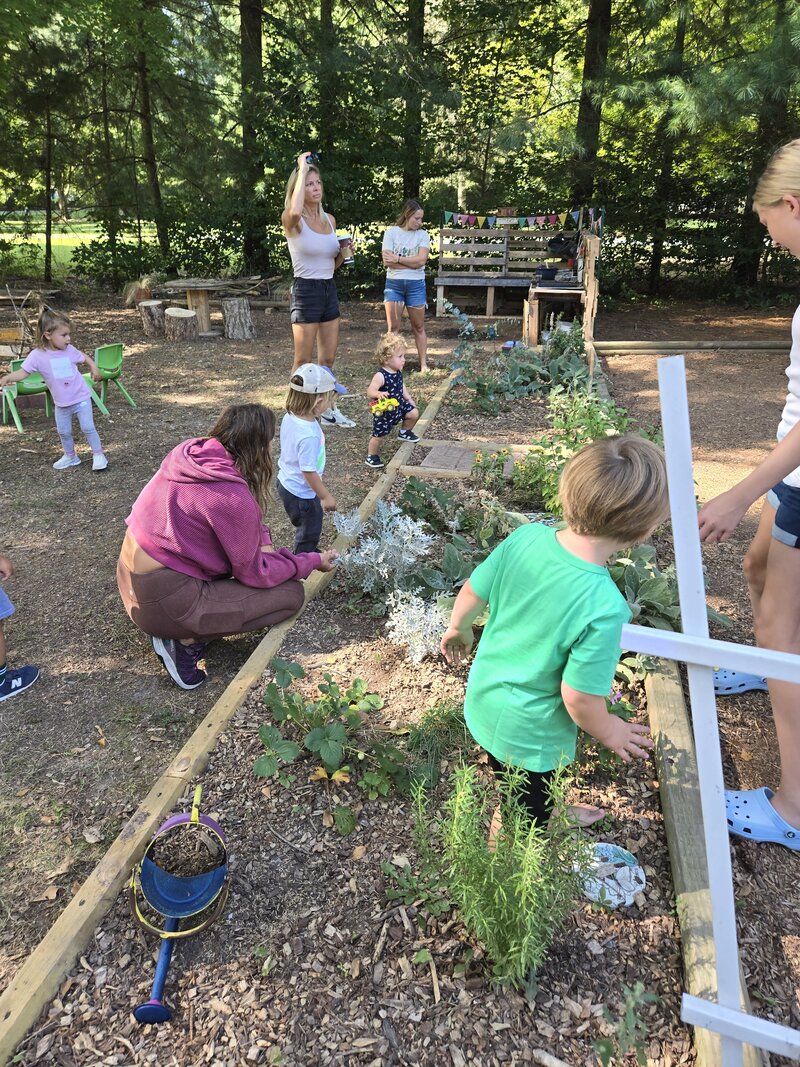
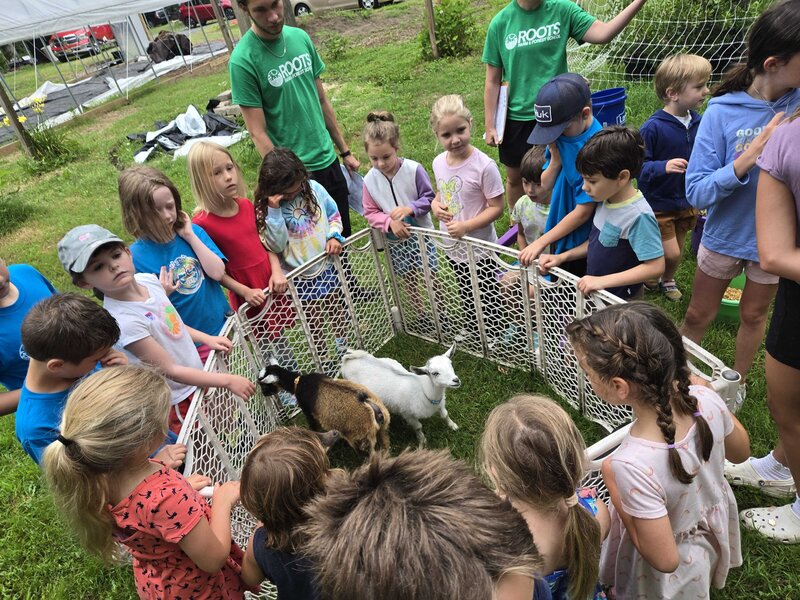
We believe these early years don't need to be rushed.
Children have plenty of time ahead of them for desks and deadlines.
Right now, we're much more interested in helping them discover:
I can try.
I can help.
I can figure things out.
I belong here.
My ideas matter.
Those are pretty powerful foundations for everything that comes next.
If you're searching for a nature preschool in Delaware, come see what it actually looks like.
Walk the farm.
Meet the educators.
Ask all the questions.
And yes—you should probably bring boots.
Frequently Asked Questions
What is a nature preschool? Understanding nature-based early childhood education programs
A nature preschool is an early-childhood program that intentionally uses the natural environment as a central part of children's learning and development.
Programs vary significantly. Some operate almost entirely outdoors, while others combine indoor classrooms with substantial outdoor experiences.
Nature preschool vs daycare - what's the difference? Education vs childcare models
Not necessarily.
"Daycare" generally refers to childcare, while preschool is typically designed around early childhood education and development. Some programs provide both.
Nature preschool describes the program's educational approach rather than the number of hours of care it provides.
What do children learn at nature-based preschool? Developmental benefits and learning outcomes
A lot—although it may not always look like a traditional lesson.
Nature-based preschool can support early literacy and numeracy, language development, motor skills, executive functioning, social-emotional skills, creativity, problem-solving, independence, and scientific thinking through play and real-world experiences.
Does nature preschool teach academics? Early literacy and numeracy in outdoor preschools
They can.
At ROOTS, early literacy and numeracy are woven developmentally into children's experiences through stories, songs, conversation, sound and language play, counting, sorting, patterns, measurement, nature exploration, and hands-on experiences.
The goal isn't to turn preschool into elementary school.
It's to build the foundations children will need when they're ready for the next stage.
What do children wear to nature preschool?
Layers and weather-appropriate clothing matter.
Depending on the season, that may include waterproof boots, rain gear, warm layers, hats, mittens, or clothing that can comfortably get dirty.
The most important rule?
Don't send them in anything you're heartbroken to see covered in mud.
What are the hours for ROOTS Nature Preschool?
ROOTS Nature Preschool is a two-hour program offered twice weekly for children ages 2–5, with options at our Georgetown and Milton campuses.
Current schedules and availability can change, so families should check our program page for the most up-to-date information.
Is outdoor nature-based preschool right for my child? Finding the best early education option
No single educational model is right for every child or every family.
The best way to know is to visit, ask questions, talk honestly about your child's needs, and see how the environment feels.
Sometimes you know pretty quickly when you've found a place where your child can belong.

