Forest School vs. Montessori vs. Waldorf: What's Actually Different?
If you've started looking for school alternatives outside of traditional education, you've probably come across the same handful of words:
And after about twenty minutes of Googling, they can all start to sound… kind of the same.
Smaller classes. Natural materials. Less screen time. More independence. More play. More respect for childhood.
But underneath those similarities are some pretty significant differences in what each philosophy believes about how children learn, what the adult's role should be, when academics should be introduced, and what a school day should actually feel like.
And then there's another layer that doesn't always make it into the Google search:
Very few modern schools fit perfectly inside one philosophical box.
ROOTS certainly doesn't.
So rather than asking which educational philosophy is "best," it can be much more useful to understand what each one values—and then ask which pieces align with the child standing in front of you.
Understanding Montessori, Waldorf, and Forest School Educational Philosophies
Montessori
The Montessori method was developed by Dr. Maria Montessori in Italy in the early 1900s.
A Montessori classroom is intentionally prepared with specific materials arranged in sequence. Children are given significant independence to choose their work within that environment, and they often stay with an activity for as long as they need.
The adult—usually called a guide—observes closely, introduces materials and lessons when a child is ready, and then steps back to allow the child to practice independently.
Montessori classrooms are also typically mixed-age, often spanning about three years.
There is a strong emphasis on independence, concentration, order, practical life skills, and the idea of:
"Help me to do it myself."
Waldorf
Waldorf education grew from the work of Rudolf Steiner in Germany beginning in the early 1900s.
Waldorf places tremendous value on imagination, storytelling, creativity, rhythm, art, music, movement, handwork, and protecting the experience of childhood.
Particularly in the early years, the day tends to have a predictable rhythm rather than being driven by formal academics. Stories, songs, baking, painting, seasonal celebrations, outdoor play, and imaginative play can all be central parts of the experience.
Traditional Waldorf education also tends to introduce formal academics later than many conventional or Montessori programs, although modern Waldorf-inspired schools vary considerably in how closely they follow that approach.
Forest School
Forest School is less of a prescribed curriculum and more of an educational approach.
Its modern roots are often connected to Scandinavian outdoor education and the later Forest School movement in the United Kingdom.
The natural world isn't simply somewhere children go for recess.It is the learning environment.
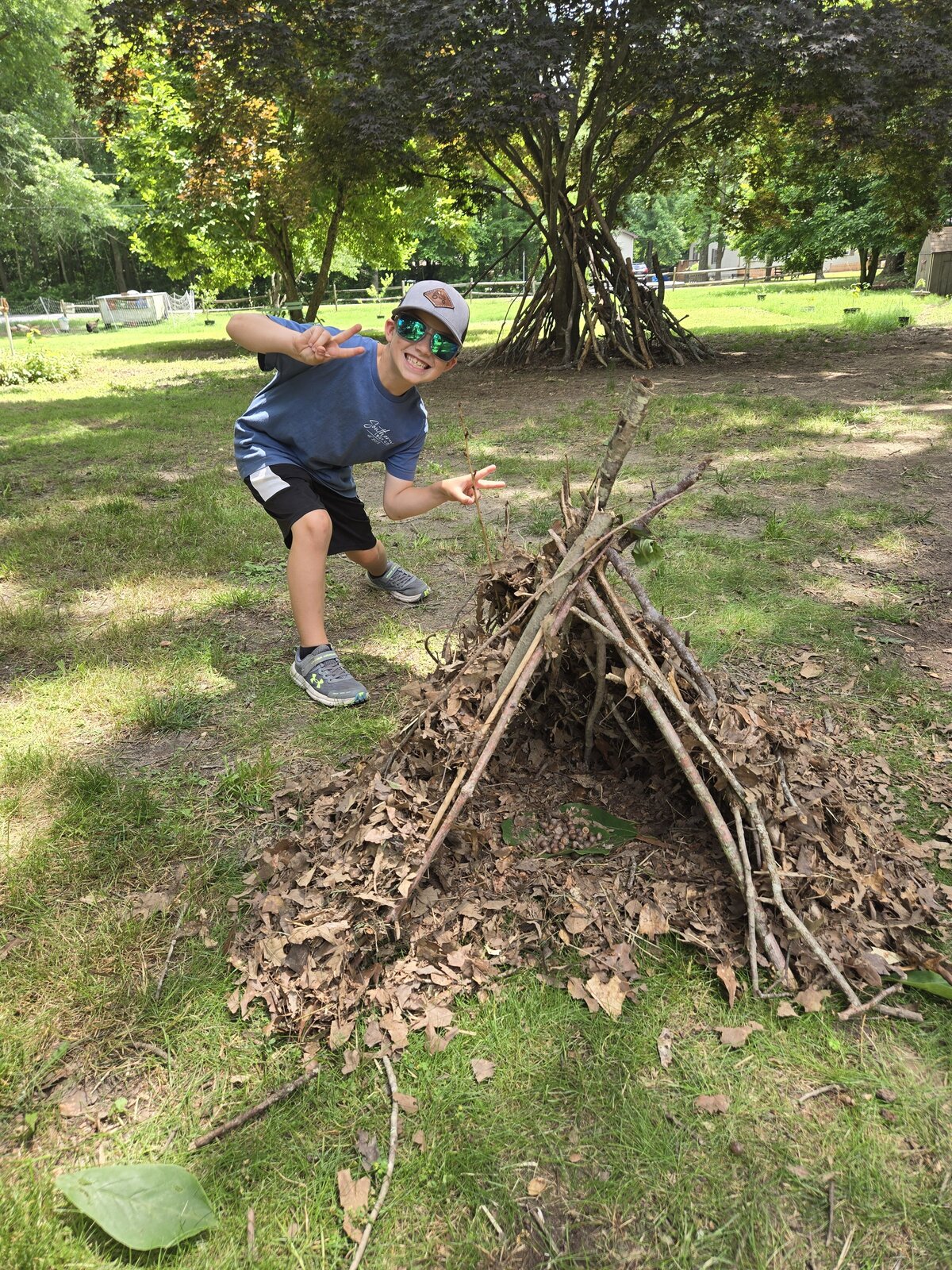
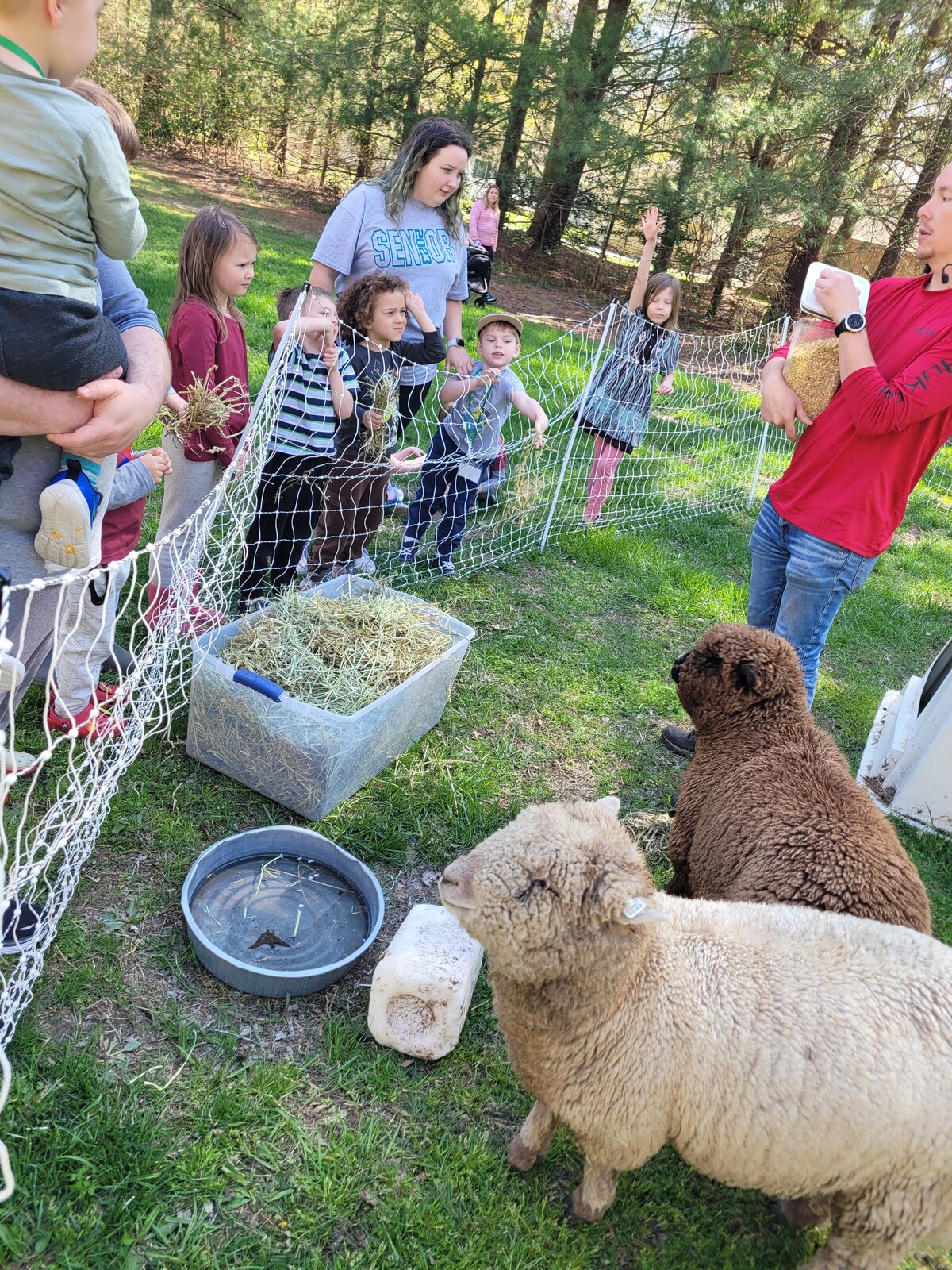
Children return to the same natural spaces over time, build relationships with those places, explore their interests, encounter manageable risk, solve real problems, and develop confidence through experience.
Adults are there to observe, support, scaffold, ask questions, introduce possibilities, and help children safely stretch what they believe they're capable of doing.
And because Forest School is an approach rather than one standardized curriculum, two forest schools can look very different from each other.
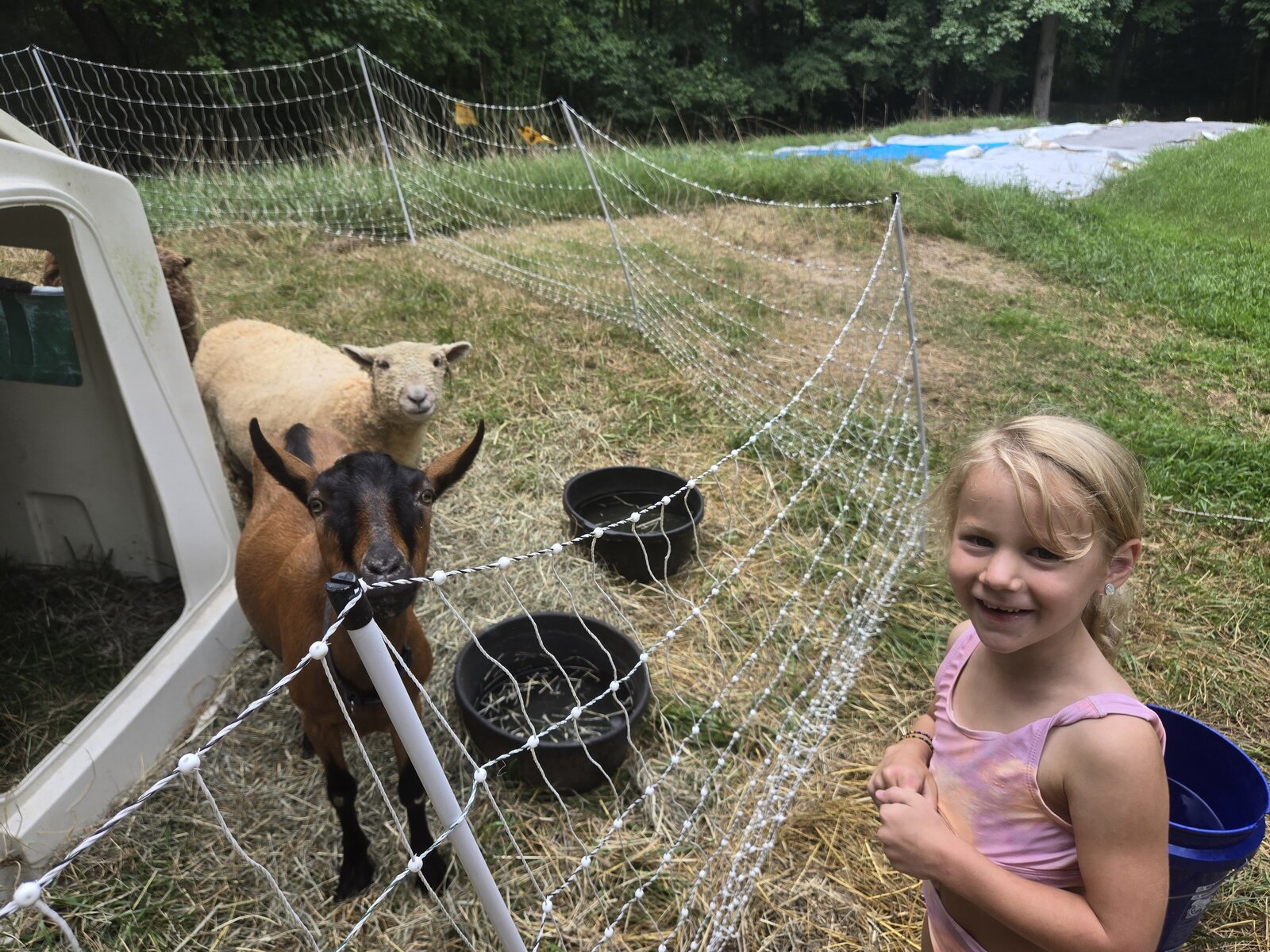
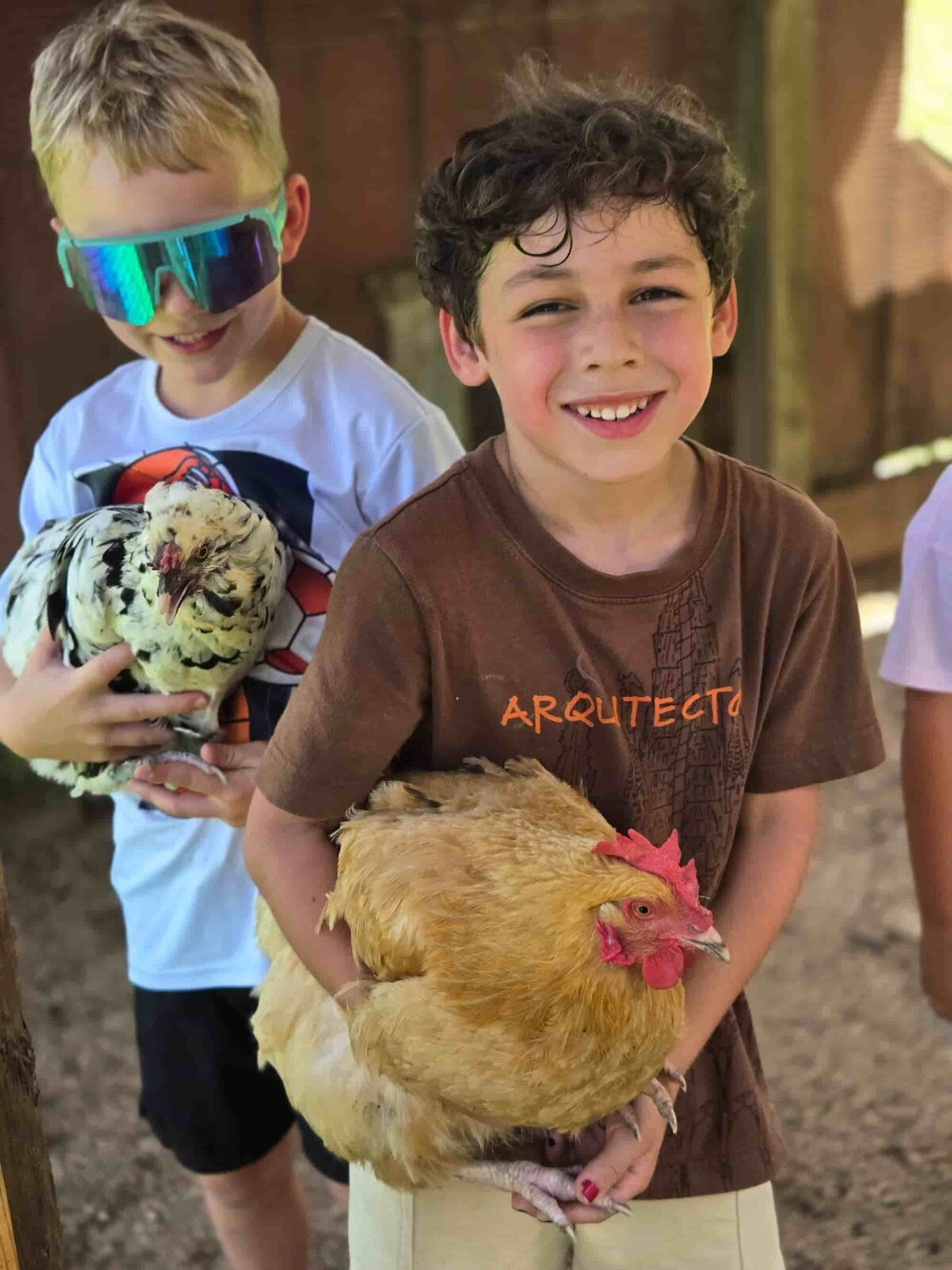
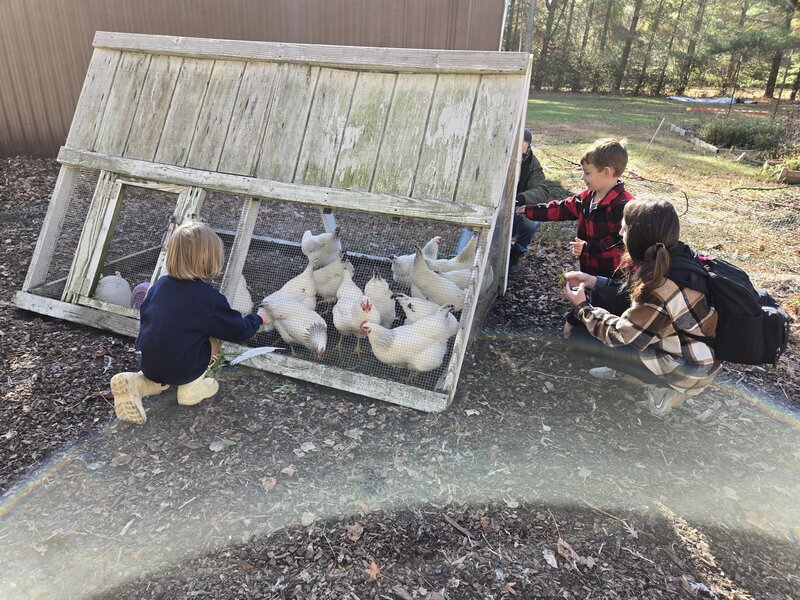
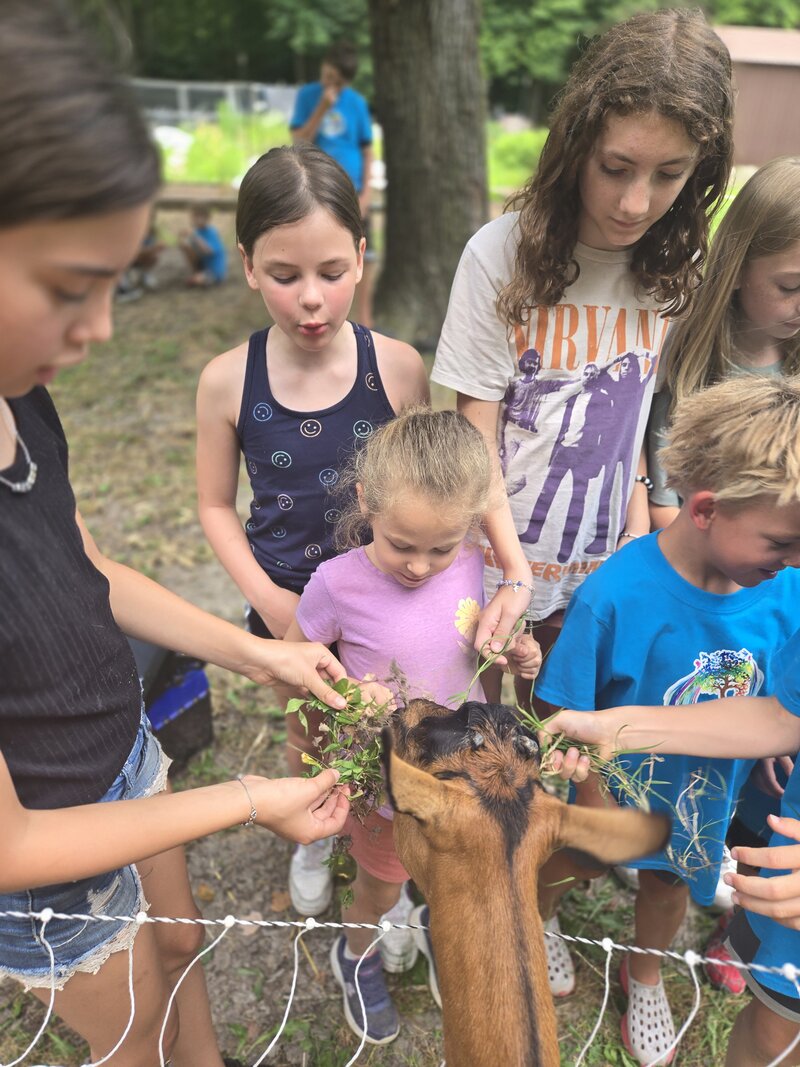
A farm school may add another layer: gardens, animals, food systems, tools, building, stewardship, and the meaningful work that naturally comes with caring for a piece of land.
That's where ROOTS has found a lot of its home.
What Does an Actual Day Look Like?
This is where the differences become much easier to see.
A Montessori Morning
You may walk into a Montessori classroom and find children deeply engaged in completely different work.
One child may be using sandpaper letters. Another may be working with beads to understand mathematical concepts. Another may be pouring water, preparing food, washing something, or completing a practical-life activity.
The environment has been carefully prepared so children can access materials independently.
Rather than the entire class moving through the same lesson at the same time, the guide observes, offers individual or small-group lessons, and gives children long periods of uninterrupted work.
There's freedom—but it's freedom within a highly intentional environment.
A Waldorf Morning
A Waldorf early-childhood classroom may feel much more rhythmic.
Children might begin with songs or movement, move into imaginative free play, listen to a story, bake bread, paint with watercolors, work with natural materials, or spend time outdoors.
Rather than filling the day with separate academic subjects, learning is often woven into stories, seasons, art, movement, and everyday experiences.
Predictability matters.
The rhythm itself helps children know what comes next.
A Forest or Farm School Morning
A Forest School morning might begin outdoors and simply… stay there.
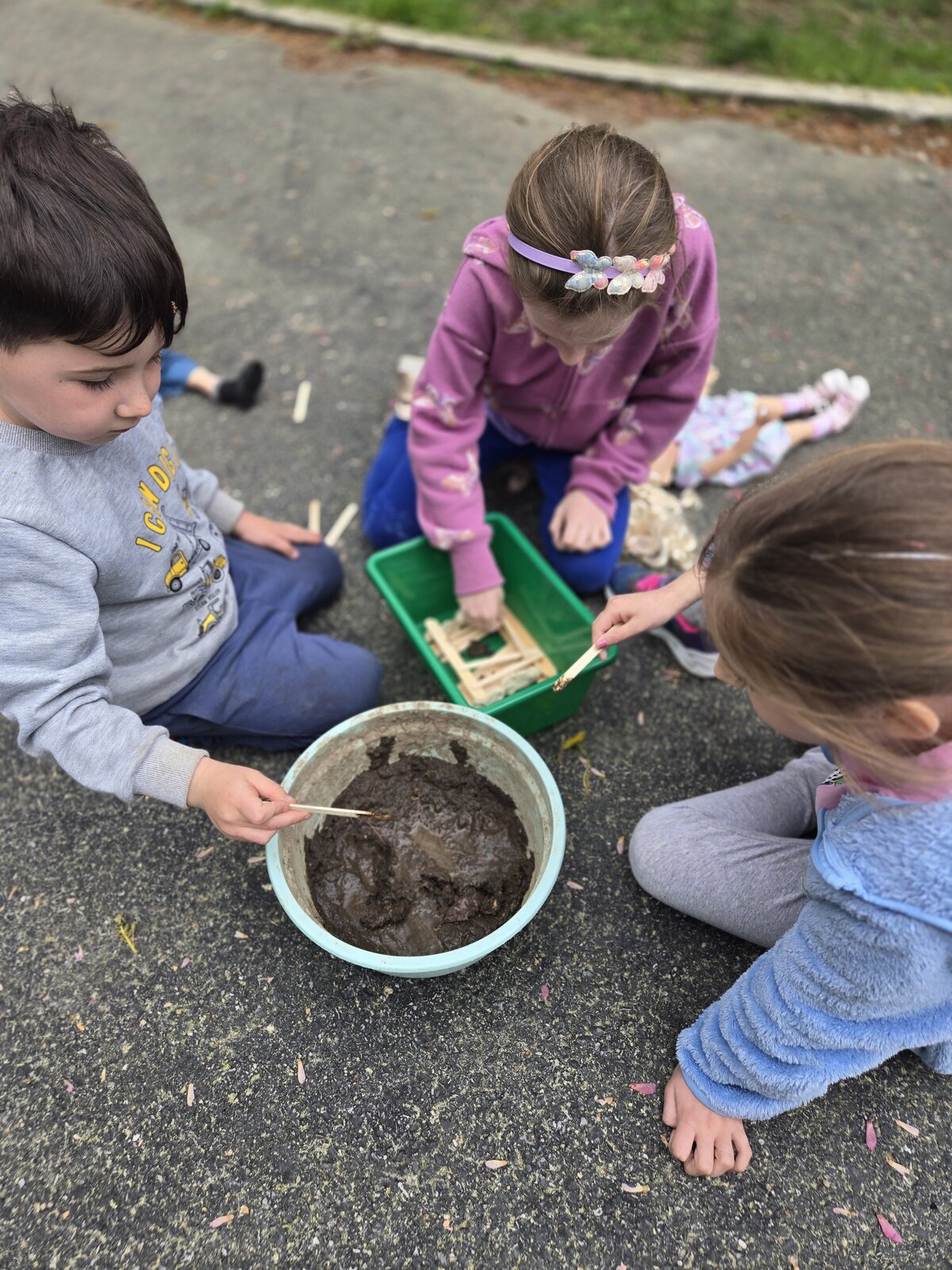
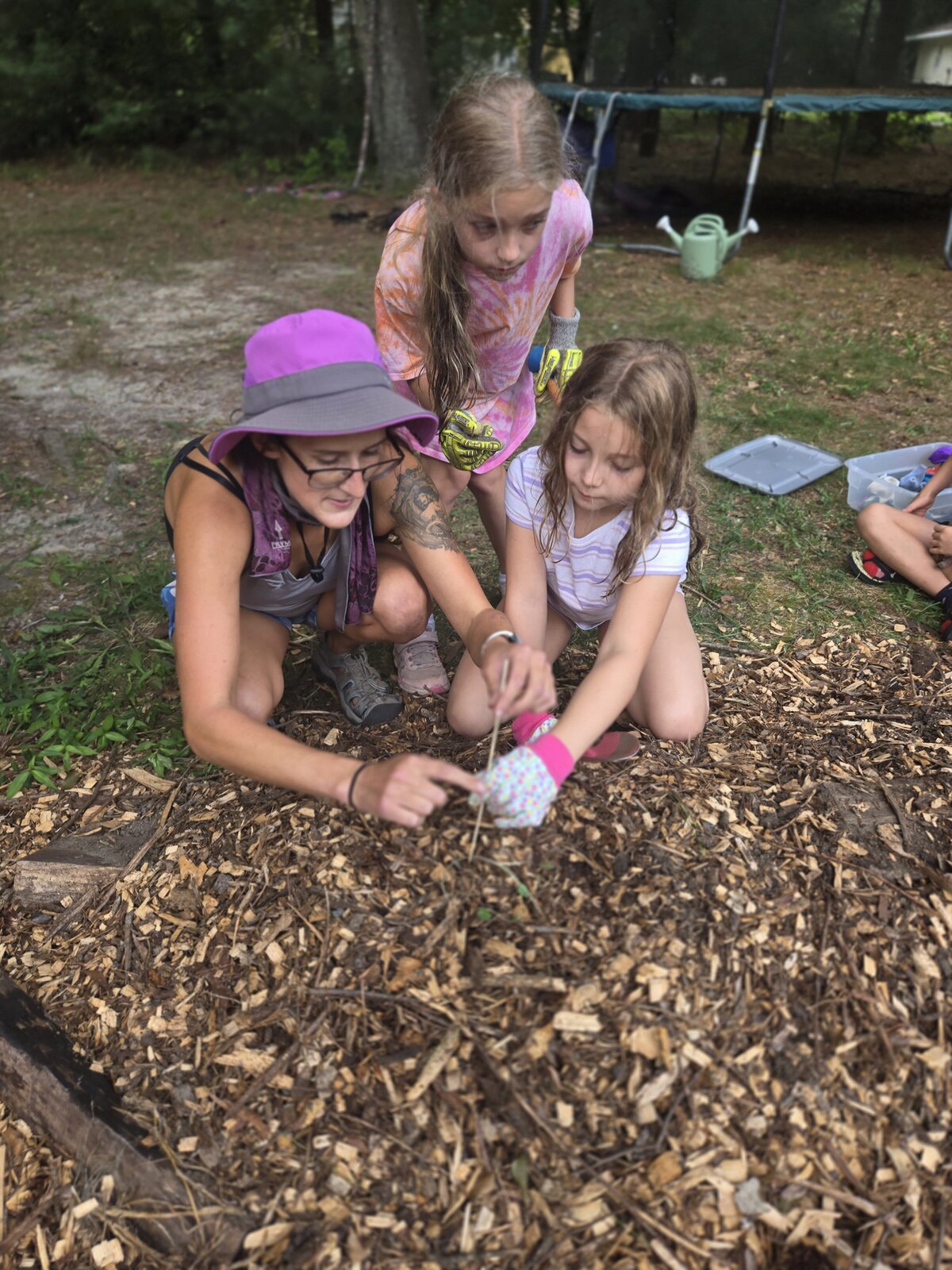
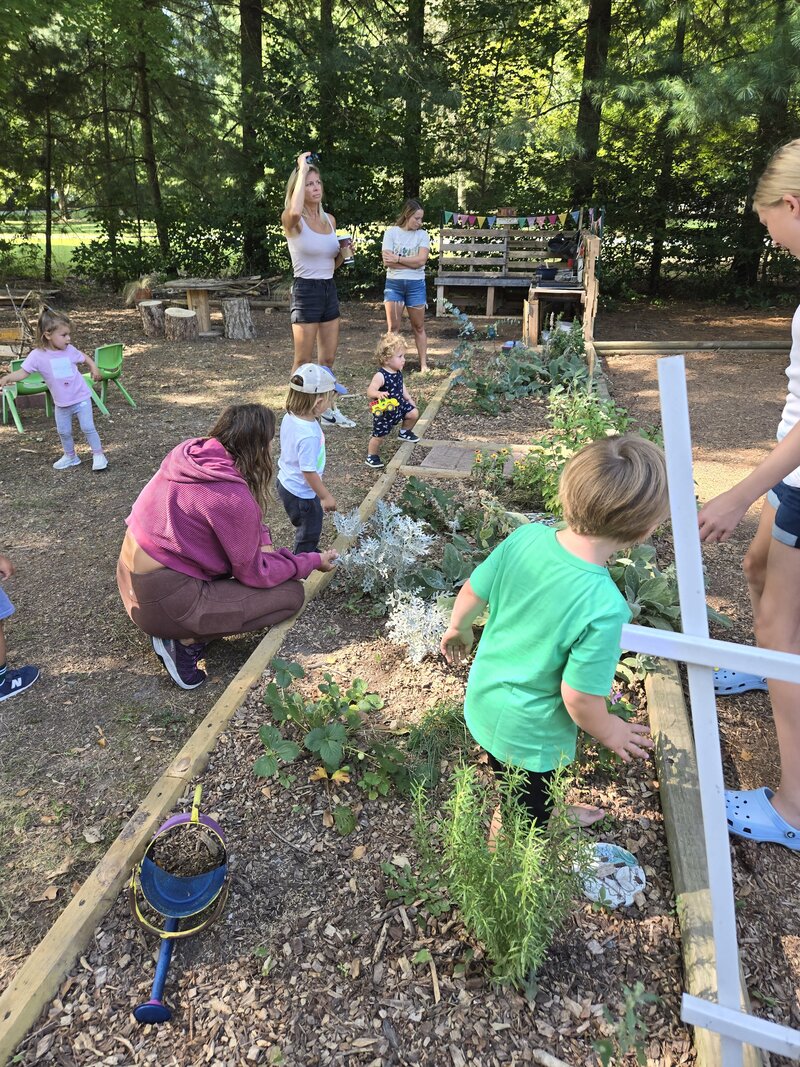
Children may be building shelters, climbing, digging, investigating something they discovered near the pond, creating with natural materials, using tools, identifying plants, following animal tracks, or working together to solve a problem that didn't exist until five minutes ago.
The weather changes the classroom.The seasons change the curriculum.
And children's questions often influence where learning goes next.
But this is an important distinction:
Nature-based learning does not have to mean academics disappear.
At ROOTS Forest & Farm School, our full-day nature-based programs intentionally include both.
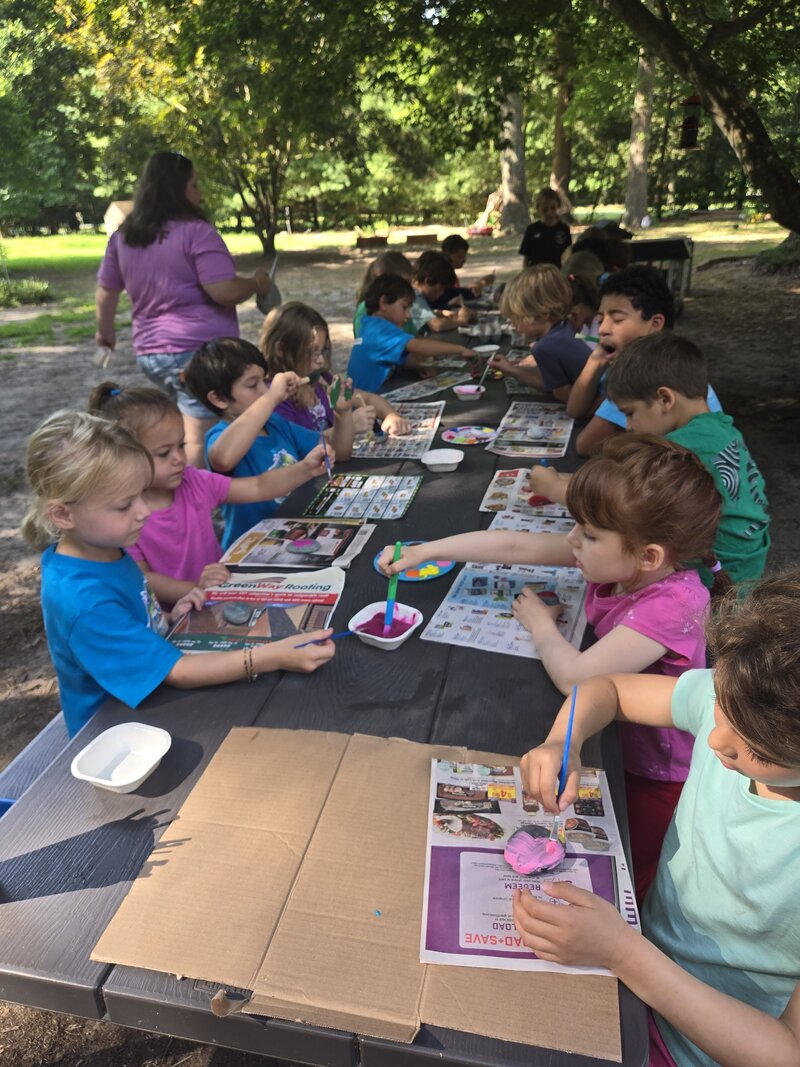
Our students have dedicated academic skill blocks for Math and ELA, generally in small groups based on where they are developmentally. They also have project-based learning, social-emotional learning, mindfulness, makerspace opportunities, practical life skills, and significant time outdoors.
Sometimes learning happens at a table.
Sometimes it happens in the woods.
Sometimes a question that starts at the pond becomes science, writing, math, research, art, and engineering before anyone realizes how many "subjects" they just covered.
That's one of the things we love most.
Where Montessori, Waldorf, and Forest School Overlap
There are reasons families interested in one often find themselves exploring the others.
All three tend to place more value than conventional education on things like:
- respecting children's developmental stages
- hands-on learning
- meaningful independence
- fewer screens, particularly for younger children
- real and natural materials
- mixed-age community
- practical skills
- time and space for deeper engagement
- seeing the child as more than a test score
But how they get there can look very different.
Montessori tends to rely on a carefully prepared environment and sequenced materials.
Waldorf tends to rely on rhythm, story, imagination, art, and developmental stages.
Forest School tends to rely on relationship with place, experiential learning, child inquiry, managed risk, and the natural environment.
And many modern alternative schools borrow from more than one.
We think that's okay.
Which Children Thrive in Each?
This is probably the question parents ask most often.
And there isn't a clean answer.
Children are much more complicated than educational philosophies.
Montessori May Appeal to a Child Who…
enjoys independence, order, repetition, mastering a skill, and being able to work deeply without constant interruption.
Some children absolutely flourish when they're given a beautifully prepared environment and the freedom to say, I'm working on this until I'm finished.
Families who value clearly sequenced materials and individualized academic progression may also be drawn to Montessori.
But Montessori schools vary, and children vary. A highly active child isn't automatically a poor fit for Montessori, just as an organized, quiet child isn't automatically a perfect one.
The actual school matters as much as the philosophy.
Waldorf May Appeal to a Child Who…
loves stories, pretend play, music, art, making things, traditions, and a predictable rhythm.
Families who want to protect space for imagination and avoid pushing formal academics too early often find a lot to appreciate in Waldorf education.
Parents should also understand the philosophy of the particular Waldorf or Waldorf-inspired school they're considering, including how it approaches academics, technology, child development, and the underlying ideas that inform its model.
Forest or Farm School May Appeal to a Child Who…
learns through their whole body.
Maybe they're constantly building something.
Maybe they need to move while they think.
Maybe they're the child who notices every salamander, mushroom, stick, feather, bug, and puddle between the car and the front door.
Maybe traditional environments haven't given them many opportunities to experience themselves as competent.
Or maybe they're doing perfectly well academically—and their family simply believes childhood should contain more movement, nature, creativity, meaningful work, and real-world experience.
Forest School isn't only for children who "can't sit still."
And this matters to us.
Nature-based education doesn't have to be something you choose because traditional school failed. It can simply be the kind of childhood and education you want your child to have.
What About Reading and Math? Academic Skills in Nature-Based Education
This is one of the biggest areas where these approaches can differ.
Montessori education generally introduces literacy and mathematics through carefully sequenced, hands-on materials, often allowing children to progress individually as they're ready.
Traditional Waldorf education generally takes a more developmental approach to formal academics, particularly in early childhood, with storytelling, oral language, movement, art, rhythm, and play preceding more formal instruction.
Forest School education doesn't prescribe a reading or math timeline at all.
That's because Forest School itself isn't an academic curriculum.
- A Forest School can be an enrichment program that teaches no formal academics.
- It can be one component of a homeschool.
- Or it can exist inside a broader educational program that explicitly teaches reading, writing, and mathematics.
ROOTS falls into that last category.
We believe children deserve both.
They deserve strong foundational academic skills.
And they deserve to move their bodies, make things with their hands, spend time outside, solve problems, develop relationships, experience appropriate risk, create, wonder, and discover what they're capable of.
We don't think those things are competing priorities.
So Why Did We Choose Farm and Forest Education at ROOTS?
The truth is, ROOTS didn't begin because we studied every educational philosophy and decided Forest School won.
It grew much more organically than that.
We kept seeing what happened when children were given space, trust, meaningful work, nature, and adults who genuinely knew them.
Children who struggled to feel successful in one environment suddenly had something to contribute.
And children began experiencing themselves not simply as students completing work, but as capable people whose ideas and contributions mattered.
That's what stuck with us.
Over time, ROOTS has continued to evolve.
We've become more intentional about academics. We've built clearer learning continuums. We've strengthened our Math and ELA skill blocks and the ways we observe and document student growth.
But the heart hasn't changed.
We still believe children learn best through relationship—with themselves, with other people, and with the world around them.
Our entire model comes back to three things:
We borrow ideas from many places.
You'll see independence and practical life skills that may feel familiar to Montessori families.
You'll see rhythm, storytelling, handwork, creativity, and respect for childhood that Waldorf families may recognize.
You'll see project-based learning, social-emotional learning, academics, makerspaces, gardens, animals, tools, forests, and a whole lot of mud.
But we're not trying to be Montessori.
We're not trying to be Waldorf.
And we're not trying to replicate traditional school underneath the trees.
We're ROOTS.
We're continuing to build an educational model around a question that matters much more to us than fitting neatly into any one philosophy:
What does it look like to help children grow into capable, connected, and caring humans?
That's the work.
If you're trying to figure out what kind of environment feels right for your child, come walk one of our Delaware campuses.
Ask questions. Meet the educators. See what the children are actually doing.
And wear shoes that can get dirty.
Frequently Asked Questions
Is Forest School the same as Waldorf education? Comparing nature-based vs Waldorf approaches
No. They share some values, particularly around play, nature, imagination, and limiting unnecessary technology in childhood, but they're distinct educational approaches.
Waldorf is a defined educational philosophy with particular ideas about child development, rhythm, academics, art, and storytelling. Forest School is an approach centered on sustained experiences in natural environments, child inquiry, relationship with place, and appropriate risk.
Individual programs can borrow elements from both.
Forest School vs Montessori: What are the key differences in educational philosophy?
One of the clearest differences is the learning environment.
Montessori education centers on a carefully prepared environment with specific materials and learning sequences, typically indoors. Forest School centers the natural environment and allows experiences, changing conditions, children's interests, and the landscape itself to shape learning.
Both can value independence and hands-on learning, but they approach those goals differently.
Academic focus comparison: Montessori vs Forest School - which emphasizes academics more?
It depends on the program.
Montessori includes an established progression of academic materials and lessons. Forest School itself does not prescribe an academic curriculum, so one Forest School may be purely enrichment-based while another may operate within a broader academic program.
At ROOTS, Math and ELA are taught intentionally through dedicated academic skill blocks alongside experiential and nature-based learning through our Academic Continuum.
Do Montessori and Waldorf schools include outdoor nature education? Comparing outdoor time.
Absolutely. Many Montessori and Waldorf schools place significant value on outdoor experiences.
The distinction isn't that Montessori and Waldorf children stay inside while Forest School children go outside.
It's about what role the natural environment plays in the educational model.
In Forest School, nature isn't simply one part of the day. The ongoing relationship between the child and the natural environment is foundational to the approach.
Most Forest Schools are outdoors in all weather- but this varies upon programs.
Can a child transition from Forest School to a more traditional school?
Yes. Children move between educational environments for all kinds of reasons.
Every transition may require some adjustment—to schedules, classroom expectations, group size, teaching styles, or routines—so families should keep good educational records and communicate with the receiving school about placement and expectations.
There's research and evidence out there for validation of each educational model.
Which educational model is best - Montessori, Waldorf, or Forest School? Comparing philosophies.
None is universally better.
A philosophy can sound perfect on paper and still not be the right environment for a particular child—or the particular school implementing that philosophy may not be the right fit.
Look beyond the label.
Visit the school. Watch the adults. Ask how they respond when a child struggles. Ask how they approach academics, behavior, conflict, independence, and individual differences.
Then pay attention to your child.
The best question isn't, "Which philosophy is best?"
It's:
"Where does my child get to become more fully themselves while still being supported to grow?"

